

Overview
Since 2008, the Norris Lab has been studying the migration ecology and conservation of the eastern migratory population of monarch butterflies (Danaus plexippus). Monarchs undertake one of the world’s most spectacular insect migrations, travelling thousands of kilometres between breeding grounds across eastern North America and overwintering forests in central Mexico. Understanding how different stages of this annual cycle influence survival, reproduction, migration, and ultimately population dynamics has been a central focus of our research.
Our early work used naturally occurring stable isotopes in butterfly wings to determine the natal origins of monarchs captured throughout their breeding, migratory, and overwintering range. These studies helped reveal broad-scale patterns of migratory connectivity and identified the regions that contribute most to the overwintering population. More recently, we have expanded this work by integrating radio telemetry, field experiments, population modelling, and large-scale citizen science datasets to better understand how conditions experienced throughout the annual cycle shape migratory behaviour and population change.
A major focus of our research is identifying the mechanisms responsible for long-term population declines. Our studies have examined how habitat loss, agricultural practices, climate, neonicotinoid insecticides, migration, and weather influence monarch populations, while also investigating the physiological mechanisms underlying migration and navigation. By integrating data collected across the breeding, migratory, and overwintering periods, we are developing predictive models that identify when and where conservation actions will have the greatest impact.
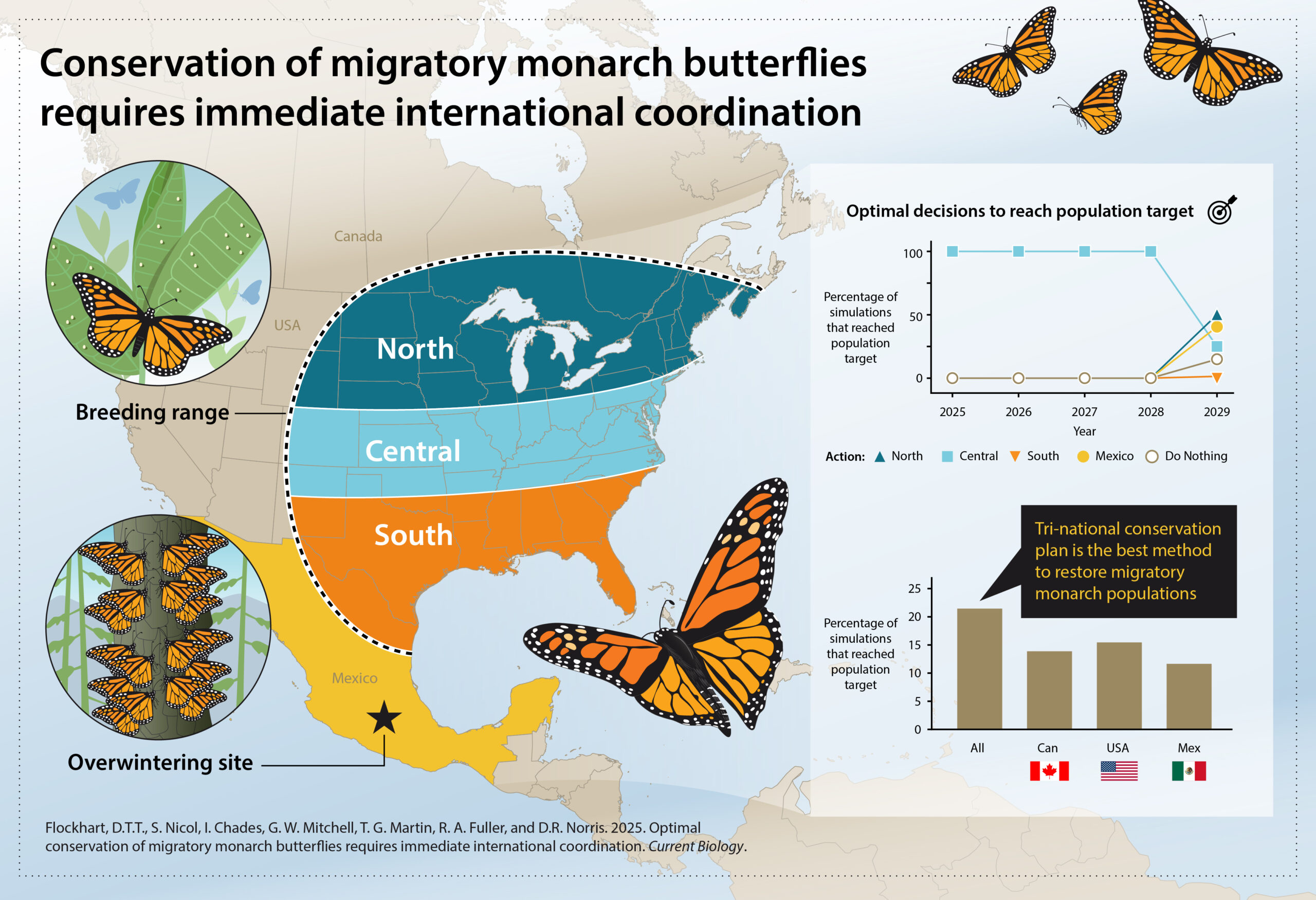
Our research has also contributed directly to monarch conservation across North America. Working with collaborators throughout Canada, the United States, and Mexico, we have evaluated alternative conservation strategies, identified priorities for habitat protection and restoration, and demonstrated that successful recovery of migratory monarchs requires coordinated international conservation efforts spanning the entire annual cycle.
Together, these studies extend beyond monarch butterflies, providing broader insights into how events throughout the annual cycle shape migratory populations and how conservation actions can be coordinated across international boundaries.
Monarch Butterfly Publications
PDF’s of papers can be found in the “Publications” section of this website.
28. Flockhart, DTT, Nicol, S, Chades, I, Mitchell, GW, Martin, TG, Fuller, RA & Norris, DR. Optimal conservation of migratory monarch butterflies requires immediate international coordination. In press: Current Biology
27. Reich, MS, Kindra, M, Dargent, F, Hu, L, Flockhart, DTT, Norris, DR, Kharouba, H, Talavera, G & Bataille, C. 2023. Metals and metal isotopes in insect wings: implications for diet, geolocations and pollution exposure. Frontiers in Ecology & Evolution 11:1085903.
26. Reich, MS, Flockhart, DTT, Norris, DR, Hu, L & Bataille, C. 2021. Continuous-surface geographic assignment of migratory insects using strontium isotopes: a case study with monarch butterflies. Methods in Ecology & Evolution 12(12):2445-2457.
25. Wilcox, AE, Newman, AEM, Raine, NE, Mitchell, GW & Norris, DR. 2021. Captive-reared migratory monarch butterflies show natural orientation when released in the wild: reply to Davis (2021). Conservation Physiology 9(1):coab064.
24. Knight, SM, Flockhart DTT, Derbyshire, R, Bosco, MG & Norris, DR. 2021. Experimental field evidence shows milkweed contaminated with a common neonicotinoid decreases the survival of monarch butterflies. Journal of Animal Ecology 90(7)1742-1752.
23. Wilcox, AE, Newman, AEM, Raine, NE, Mitchell, GW & Norris, DR. 2021. Captive-reared migratory monarch butterflies show natural orientation when released in the wild. Conservation Physiology 9(1):coab032.
22. Wilcox, AE, Newman, AEM & Norris, DR. 2021. Developmental and reproductive effects of neonicotinoid exposure in monarch butterflies (Danaus plexippus). Canadian Entomologist 153(3):327-342.
21. Wilcox, AE, Newman, AEM, Raine, NE, Mitchell, GW & Norris, DR. 2021. Effects of early-life exposure to sublethal levels of a common neonicotinoid on the orientation and migration of monarch butterflies (Danaus plexippus). Journal of Experimental Biology 224(4).
20. Grant, TJ, Flockhart, DTT, Blader, TR, Hellmich, RL, Pitman, GM, Tyner, S, Norris, DR & Bradbury, SP. 2020. Estimating arthropod survival probability from field counts: a case study with monarch butterflies. Ecosphere 11(4):e03082.
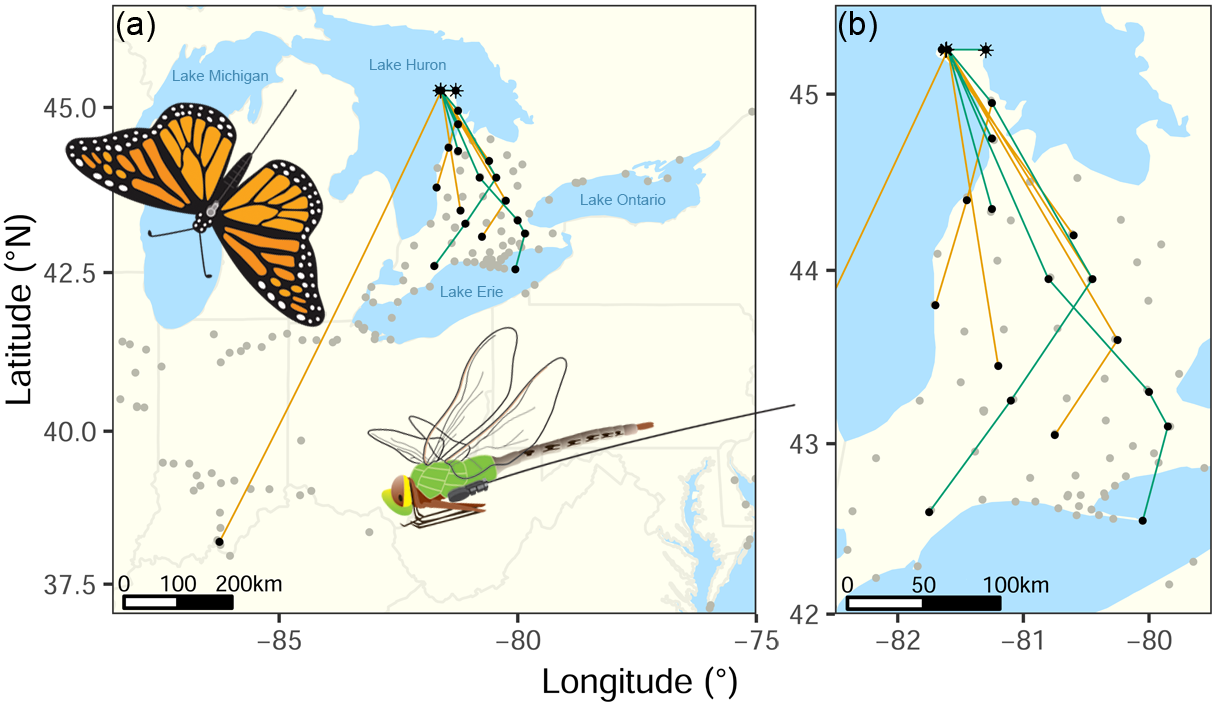
19. Knight, SM, Pitman, GM, Flockhart, DTT & Norris, DR. 2019. Radio-tracking reveals how wind and temperature influence the pace of insect migration. Biology Letters 15:20190327.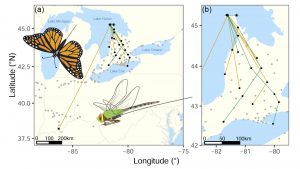
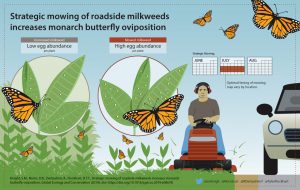
18. Knight, SM, Norris, DR, Derbyshire, R, Flockhart, DTT. 2019. Strategic mowing of roadside milkweeds increases monarch butterfly oviposition. Global Ecology & Conservation 19:e00678.
17. Flockhart, DTT, Larrivee, M, Prudic, KL & Norris, DR. 2019. Estimating the annual distribution of monarch butterflies in Canada over 16 years using citizen science data. Facets 4: 238-253.
16. Wilcox, AE, Flockhart, DTT, Newman AEM & Norris, DR. 2019. An evaluation of studies on the potential threats contributing to the decline of eastern migratory North American monarch butterflies (Danaus plexippus). Frontiers in Ecology & Evolution 7:art99.
15. Vander Zanden, HB, Chaffe, CL, Gonzalez-Rodriquez, A, Flockhart, DTT, Norris, DR & Wayne, ML. 2019. Alternate migration strategies of eastern monarch butterflies revealed by stable isotopes. Animal Migration 5:74-83.
14. Flockhart, DTT, Acron, JH, Hobson, KA & Norris, DR. 2019. Documenting successful recruitment of monarch butterflies at the extreme northern edge of their range. Canadian Entomologist 151(1):49-57.
13. Satterfield, DA, Maerz, JC, Hunter, MD, Flockhart DTT*, Hobson, KA, Norris, DR, Streit, H, de Roode, J, Altizer, S. 2018. Migratory monarchs that encounter resident monarchs show life-history changes and higher rates of parasite infection. Ecology Letters 21(11):1670-1680.
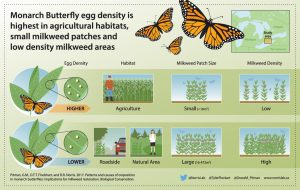
12. Pitman, G, Flockhart, DTT & Norris, DR. 2018. Patterns and causes of oviposition in monarch butterflies: implications for milkweed restoration. Biological Conservation 217:54-65.
11. Flockhart, DTT, Dabydeen, A, Satterfield, D, Hobson, KA, Wassenaar, LI & Norris, DR. 2018.Patterns of parasitism in monarch butterflies during the breeding season in eastern North America. Ecological Entomology 43:28-36.
10. Flockhart, DTT, Fitz-gerald, B, Brower, LP, Derbyshire, R, Hobson, KA, Wassenaar, LI, Altizer, S & Norris, DR. 2017. Migration distance as a selective episode for wing morphology in a migratory insect. Movement Ecology 5:7.
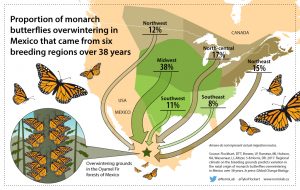
9. Flockhart, DTT, Brower, LP, Ramirez, MI, Hobson, KA, Wassenaar, LI, Altizer, S & Norris, DR. 2017. Regional climate on the breeding grounds predicts variation in the natal origin of monarch butterflies overwintering in Mexico over 38 years. Global Change Biology 23:2565-2576.
8. Flockhart, DTT, Kyser, TK, Chipley, D, Miller, N & Norris, DR. 2015. Applying strontium isotopes (87Sr/86Sr) for tracking wildlife: experimental evidence shows no fractionation between soil, plants, and herbivores. Isotopes in Environmental & Health Studies 51(3): 372-381.
7. Flockhart, DTT, Pichancourt, JB, Norris, DR & Martin TG. 2015. Unraveling the annual cycle in a migratory animal: breeding-season habitat loss drives declines of monarch butterflies. Journal of Animal Ecology 84: 155-165.
6. Flockhart, DTT, Wassenaar, LI, Hobson, KA, Martin, TG, Wunder, MB & Norris, DR. 2013. Tracking multi-generational colonization of the breeding grounds by monarch butterflies in eastern North America. Proceedings of the Royal Society, London: Biological Sciences 280 (1768).
5. Mouritsen, H, Derbyshire, R, Stakkeicken, J, Frost, B, Mouritsen, O & Norris, DR. 2013. An experimental displacement and over 50 years of tagged-recoveries show that monarch butterflies are not true navigators. Proceedings of the National Academy of Sciences, USA 110(18): 7348-7353.
4. Hanley, D, Miller, N, Flockhart, DTT & Norris, DR. 2013. Forewing pigmentation predicts migration distance in wild-caught migratory monarch butterflies. Behavioural Ecology 24: 1108-1113.
3. Miller, NG, Wassenaar, LI, Hobson, KA & Norris, DR. 2012. Migratory connectivity in the Monarch butterfly: patterns of spring re-colonization in eastern North America. Public Library of Science, One 3: e39891.
2. Flockhart, DTT, Martin, TM, & Norris, DR. 2012. Experimental examination of intraspecific density-dependent competition during the breeding period in Monarch butterflies (Danaus plexippus). Public Library of Science, One 7(9): e45080.
1. Miller, NG, Wassenaar, LI, Hobson, KA & Norris, DR. 2011. Monarch butterflies cross the Appalachians from the west to re-colonize the North American east coast. Biology Letters 7: 43-46.